In Python, Functions is a named sequence of statements that take some input (or arguments), perform a specific task, and return an output (or result). Functions are crucial for code organization and maintainability, as they allow you to break down complex tasks into smaller, more manageable pieces. Python provides a rich set of built-in functions, and you can also create your own custom functions.
Python is a versatile and powerful programming language known for its simplicity and readability. One of the fundamental building blocks of Python is functions. Functions are reusable blocks of code that perform specific tasks, making your code more organized and modular. In this blog, we will delve into the world of Python functions, exploring what they are, how to define and call them, pass arguments, return values, and even create more advanced functions.
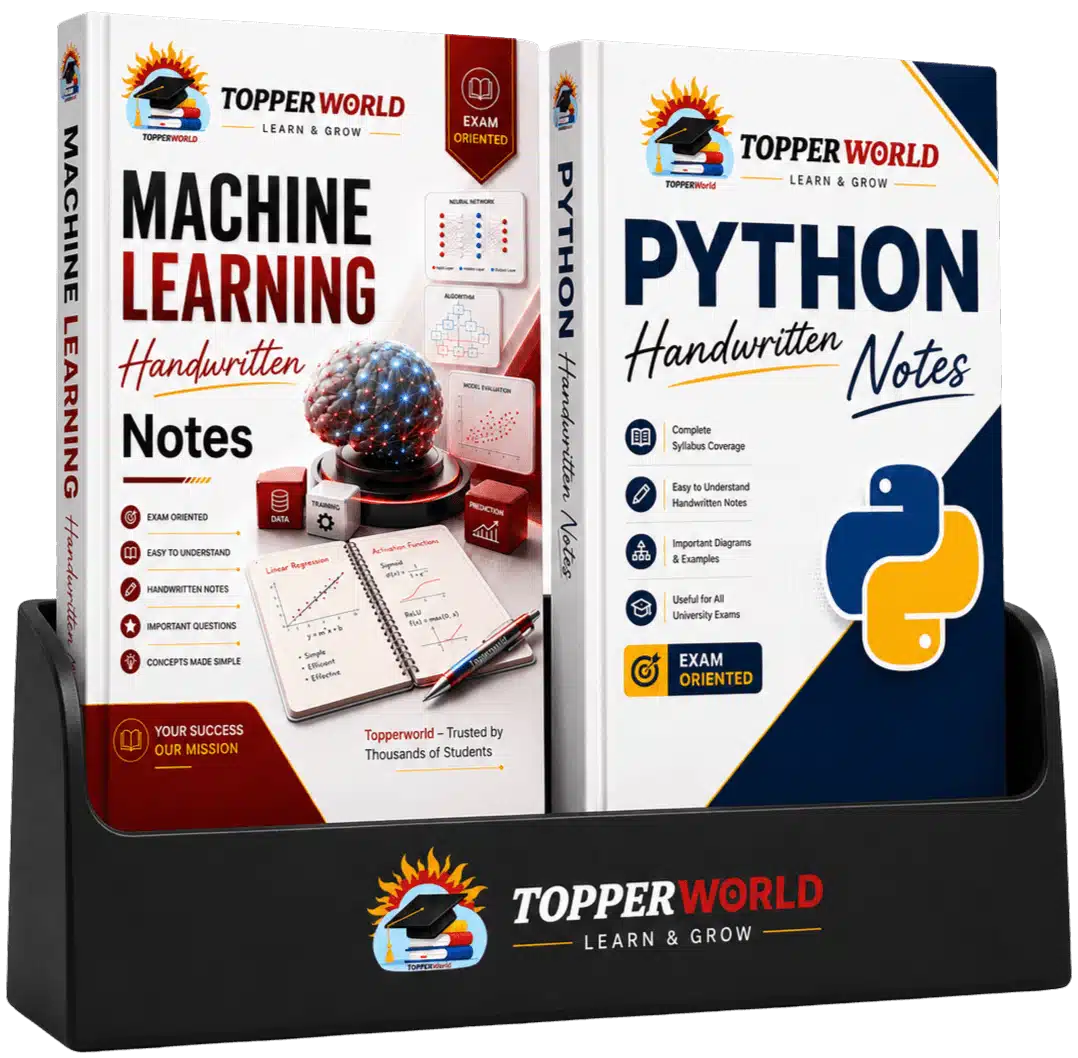
In the below PDF we discuss about Functions in Python in detail in simple language, Hope this will help in better understanding.
- PYTHON PROGRAMMING
Master Core Python Programming Concepts.
Access complete handwritten notes covering loops and functions to prepare for your university exams and technical interviews.
Defining a Function :
To define a function in Python, you use the def keyword, followed by the function name and a pair of parentheses. Here’s a basic function definition:
def greet():
print("Hello, world!")
In this example, we’ve defined a function named greet that, when called, will print “Hello, world!” to the console.
Calling a Function :
Once you’ve defined a function, you can call it by using its name followed by parentheses. Calling a function executes the code inside it. For example:
greet() # Calls the greet function
When you run this code, it will print “Hello, world!” to the console.
Related Question :
A function in Python is a reusable block of code that performs a specific task. It allows you to group related code together and call it by its name, making your code more organized and maintainable.
You can define a function in Python using the def keyword, followed by the function name, parameters (if any), and a colon. The function body is indented below the definition.
A function parameter is a value that you can pass to a function when you call it. It allows the function to receive data and perform operations on that data.
Yes, Python allows functions to call themselves recursively. This is known as recursion. It can be a powerful technique for solving problems that can be divided into smaller, similar subproblems.
A lambda function, also known as an anonymous function, is a small, unnamed function defined using the lambda keyword.